Home » Archives

Content tagged with: requirements

[12 Apr 2010 | No Comment | ]

Jeff Patton describes the different ways Agile teams deal with users and then digs in deep into story mapping – a technique that is more information rich than a simple backlog.
http://www.infoq.com/interviews/patton-story-map

[22 Mar 2010 | No Comment | ]

Ruby’s testing culture goes way back, and has been a force for making many Ruby projects a showcase for solid, maintainable code. That said, within a business an exclusive focus on TDD and BDD can easily miss the bigger picture and drive optimizations in the development process that negatively impact the business as a whole. Part business talk and part technical talk, we’ll discuss what “Experiment Driven Development” is, why you should be doing it from day 1 (probably even before writing tests!), and what cool Ruby tools you can …

[15 Mar 2010 | No Comment | ]

Gospecify is a behavior-driven development (BDD) framework for Go. Rather than focus on testing every nook and cranny of some code, it helps a programmer produce an executable specification of that code’s behavior. Go’s syntax allowed gospecify to be almost as expressive as Ruby’s rpsec; however, a few tricks had to be used to achieve the best readability. This talk will introduce BDD concepts and demonstrate how to implement them in Go using gospecify.

[10 Mar 2010 | No Comment | ]

Pickle adds many convenient Cucumber steps for generating models. Also learn about table diffs in this episode. Cucumber lets software development teams describe how software should behave in plain text. The text is written in a business-readable domain-specific language and serves as documentation, automated tests and development-aid – all rolled into one format. Pickle gives you cucumber steps that create your models easily from factory-girl or machinist factories/blueprints
http://railscasts.com/episodes/186-pickle-with-cucumber

[1 Mar 2010 | No Comment | ]

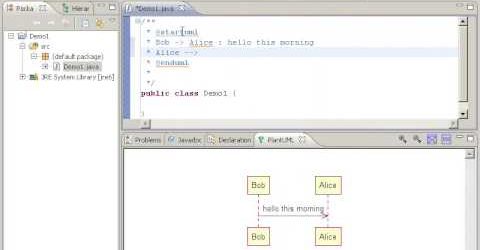
This video show the relationships between Unified Modeling Language use cases and sequence diagrams.

[9 Feb 2010 | No Comment | ]

Target-Value Design (TVD) turns design upside-down, some examples are:
- Rather than estimate based on a detailed design, design based on a detailed estimate.
- Rather than narrow choices with design, carry solution sets far into the design process.
TVD offers designers an opportunity to engage in the design conversation concurrently with people who procure services and execute the design.
http://www.infoq.com/presentations/target-value-design

[1 Feb 2010 | No Comment | ]

This tutorial starts with a use-case and elaborates it into activity, class, sequence, and communication diagrams.

[29 Jan 2010 | No Comment | ]

Jeff Patton briefly reviews the different ways that software is currently built and then describes how to create and use user personas to design and build software that has a better user experience. Jeff walks us through how to collaboratively build a user persona, what a user persona should include, and how to use these personas to write user scenarios that end up as user stories wit.

http://www.infoq.com/presentations/pragmatic-personas
Related resource
Article: Agile, Multidisciplinary Teamwork by Gautam Gosh

[26 Jan 2010 | No Comment | ]

This tutorial discuss the different levels of perspective that can be used to model of use cases, such as sea-level, clam, fish, kite, and cloud.

[14 Jan 2010 | No Comment | ]

Dan North gives an overview of Domain Driven Design and Behavior Driven Development then ties them together for a powerful mix.
http://www.infoq.com/presentations/bdd-and-ddd
