Content tagged with: cloud
Learn how to deploy and manage real-time applications on Cloud Foundry using common Node.js examples and Redis key-value store capabilities. Common applications being built on Node.js like social networking and chat require real-time scaling capabilities across multiple instances. Developers need to deal with sticky sessions, scale-up, scale-down, instance crash/restart, and more. Cloud Foundry PaaS provides a ready platform to achieve this quickly.
Taking traditional Java server-side applications to the multitenant cloud entails lots of challenges. This session shares JFrog’s experience of creating a SaaS offering, which is currently being used successfully by the Java community.
After only two years, OpenStack has become the de-facto standard open source cloud computing platform and is the fastest growing open source project in history. With over 5,000 members from over 850 different organizations in over 80 countries supporting over 500 active developers that have contributed over 500,000 lines of code, OpenStack is the foundation of numerous products and services.
Big data technologies let you work with any velocity, volume, or variety of data in a highly productive environment. This session seeks to answer questions such as “what is big data,” “how can I use unstructured data,” and “how can I integrate data collections from different sources” using Hadoop with Amazon Elastic MapReduce.
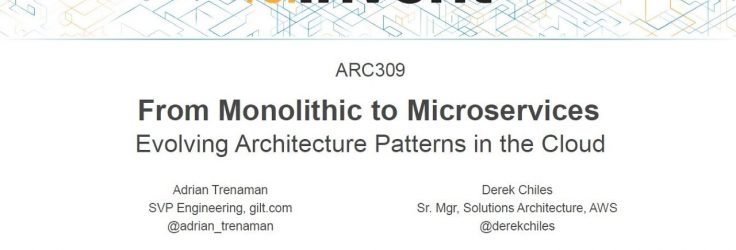
There are several current trends that are forcing application architectures to evolve. Users expect a rich, interactive and dynamic user experience on a wide variety of clients including mobile devices. Applications must be highly scalable, highly available and run on cloud environments. Organizations often want to frequently roll out updates, even multiple times a day. Consequently, it’s no longer adequate to develop simple, monolithic web applications that serve up HTML to desktop browsers.
The way we build applications is rapidly changing. HTML5, Scala, non-blocking IO, real-time push and the cloud are welcome advancements in the world of web apps. Play Framework makes using these technologies a pleasure. In this session you will learn how to build next generation applications with Play Framework and deploy those applications on the cloud.
his video demos how to quickly get to a fully agile project setup with continuous deployment. Everything is in the cloud – GIT repo, Jenkins, MongoDB and the app server. The system deploys automatically with every successful commit. The app itself is minimal, but does have a simple web interface and a database. The idea is that once you get this “walking skeleton” type app running in the cloud with continuous deployment, you can get user feedback early and often, and evolve more quickly.
This short video show you how to deploy a PHP application to Windows Azure, Microsoft’s cloud infrastructure.
Pinterest.com has grown to 2.5 billion page views per month in just under a year, and the number one question we’re asked at parties is “what’s in your stack?” Sit back while we take you on a tour of our current architecture, the lessons learned along the way, and the successes.
This video starts by reviewing Cloud Computing as an industry and where Google App Engine fits into the picture. Specifically, we discuss App Engine as a PaaS solution because of the inherent challenges of building web and other applications. We’ll outline the architecture of App Engine, what it’s major components are, introduce its features and APIs, discuss the service and how it works, present some information about current users and usage, including integration with Google Apps, and finally, give an overview of its enterprise edition called Google App Engine for …


Twitter
Facebook
RSS Feed